
45–55+ · sceptical, traditional
Legacy Keeper
Owns — or owned — a classic. Wants the heritage respected.
Turning a historic Portuguese motorcycle brand into a digital experience of its own.
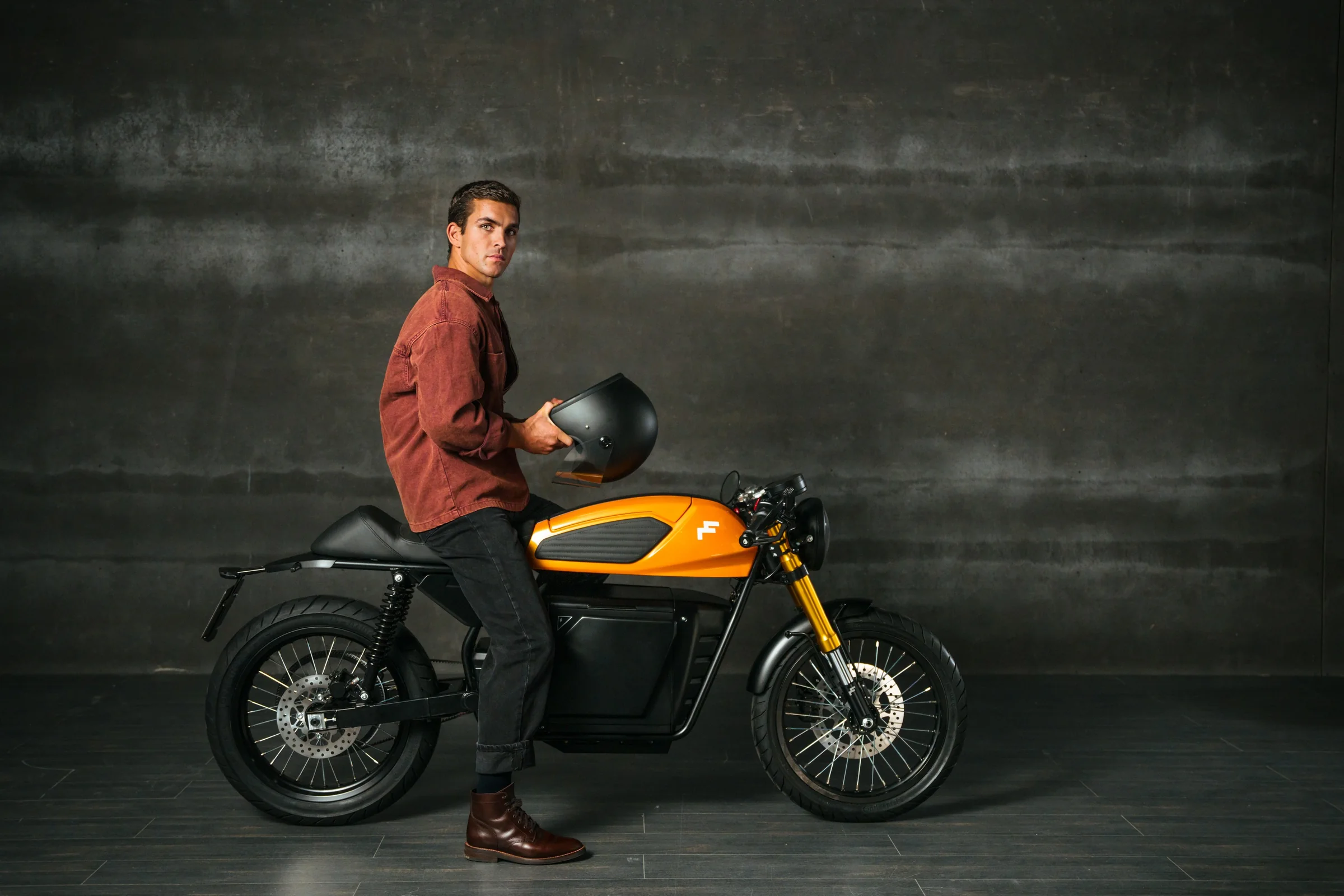
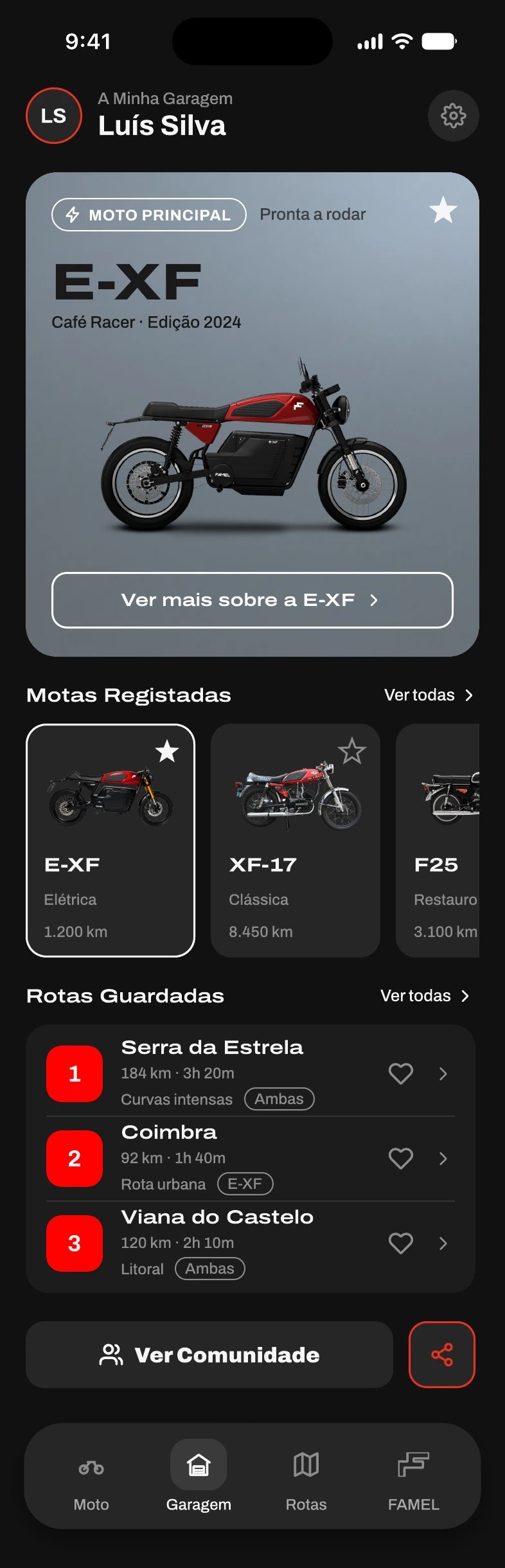
One product for two communities that never met — classic collectors and new electric riders.
A single metaphor, the Garage, with a branching onboarding that lands everyone in the same place.
12 of 15 testers found the experience coherent and made for them.
The company stopped in 2002. The community didn't.
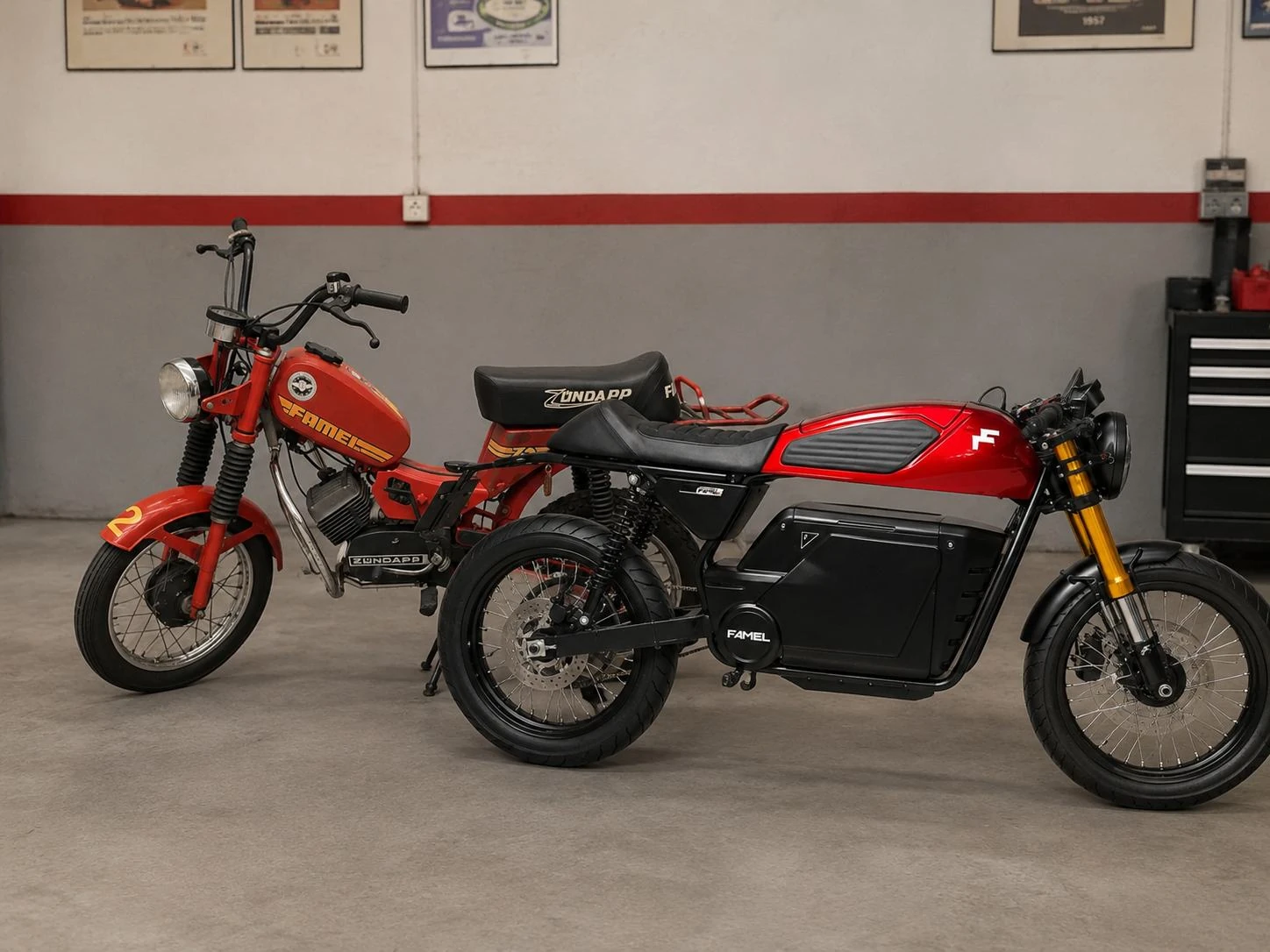
FAMEL was an iconic Portuguese motorcycle brand from the '60s to the '80s. For 24 years without a company, its community kept itself alive — restorations, meet-ups, Facebook and WhatsApp groups. Now the brand returns as an electric bike, the E-XF, and that creates two audiences with opposite ages, motives and relationships with the brand.
How do you design one digital product for two worlds — without fragmenting the experience or forcing one to fit the other?
The emotional territory is empty — and available.
Growth in electric motorcycle registrations in Portugal, Jan–Jun 2025 → Jan–Jun 2026.
The 3 best-selling brands in Portugal · H1 2026
All Chinese-made. They compete on specs and price.
Source: ACAP — Associação Automóvel de Portugal
cite the brand’s history as their main motivation.
Customer Profile FAMELown a classic FAMEL.
Customer Profile FAMELfeel an emotional bond with the classics’ legacy.
Internal studyexpect to ride for leisure.
Customer Profile FAMELexpect to ride every day.
Customer Profile FAMEL49 responses (pre-order, Jan 2025, FAMEL) · 48 questionnaires + 5 interviews (Jun 2025, team)
People buy the heritage — even without owning it. The product had to sell belonging, not features.


“What are you bringing to the garage?”
One metaphor instead of two parallel products. Every FAMEL, old or new, has a place in the Garage — and the app starts by asking the right question. Three answers: an E-XF, a classic, or no bike yet.
One question. Three possible answers.
Pairing via connectivity.
Pick the model and take a photo.
Leave your details and interests.
Different entrances, the same care. Nobody comes in through a smaller door.
Two parallel products fragmented the experience and doubled the entry point.
A FAMEL feed would compete with Instagram and pull focus from the app's utility.
The app opens by asking what you bring to the garage. Three answers, three short paths.
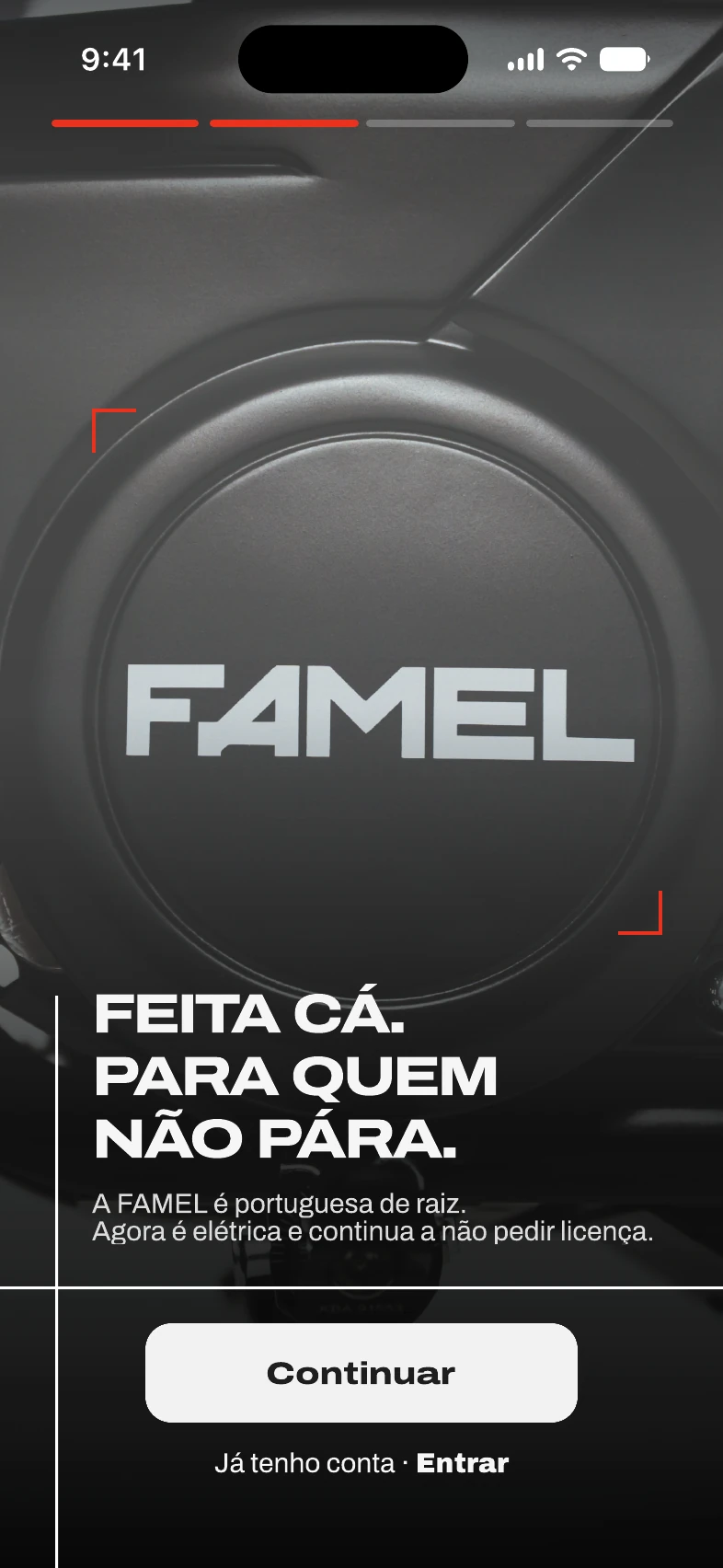
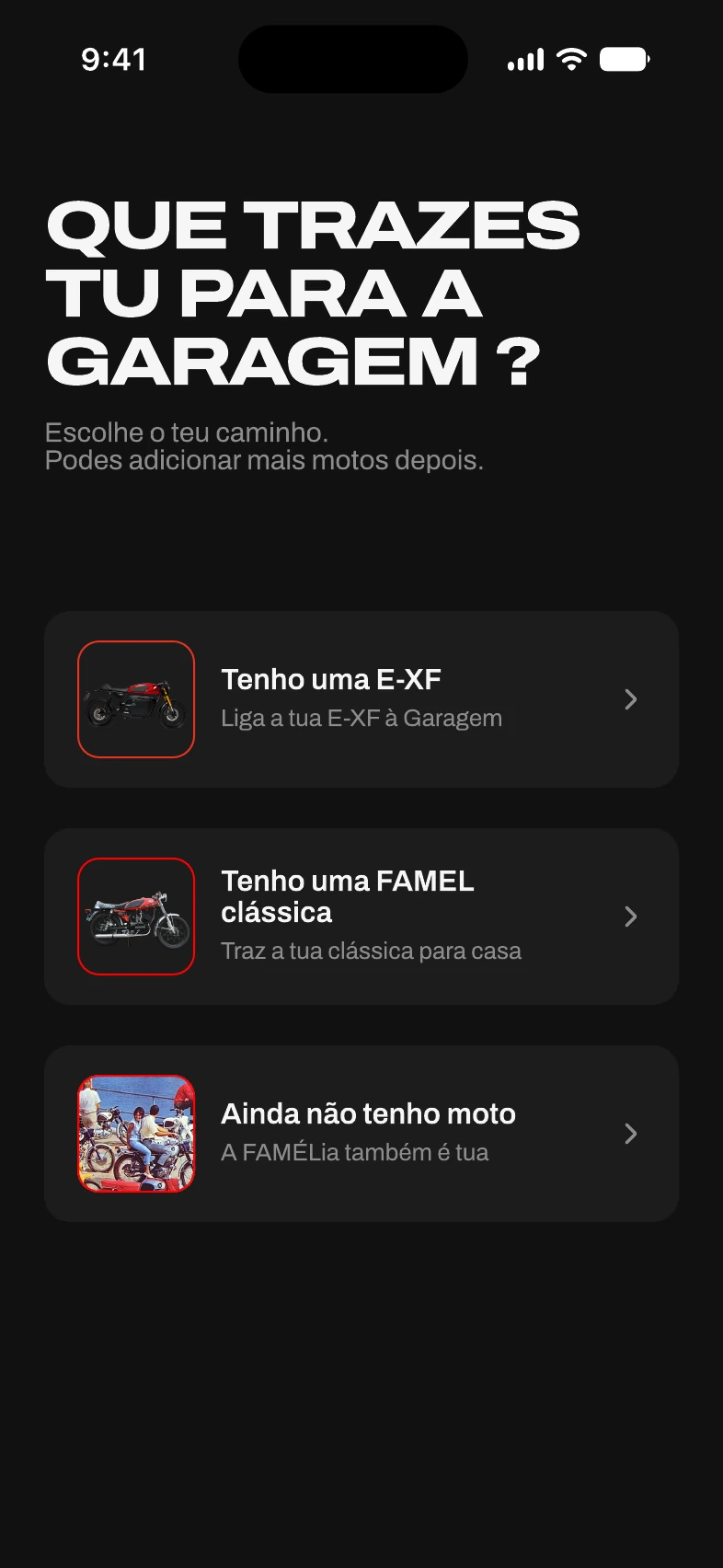
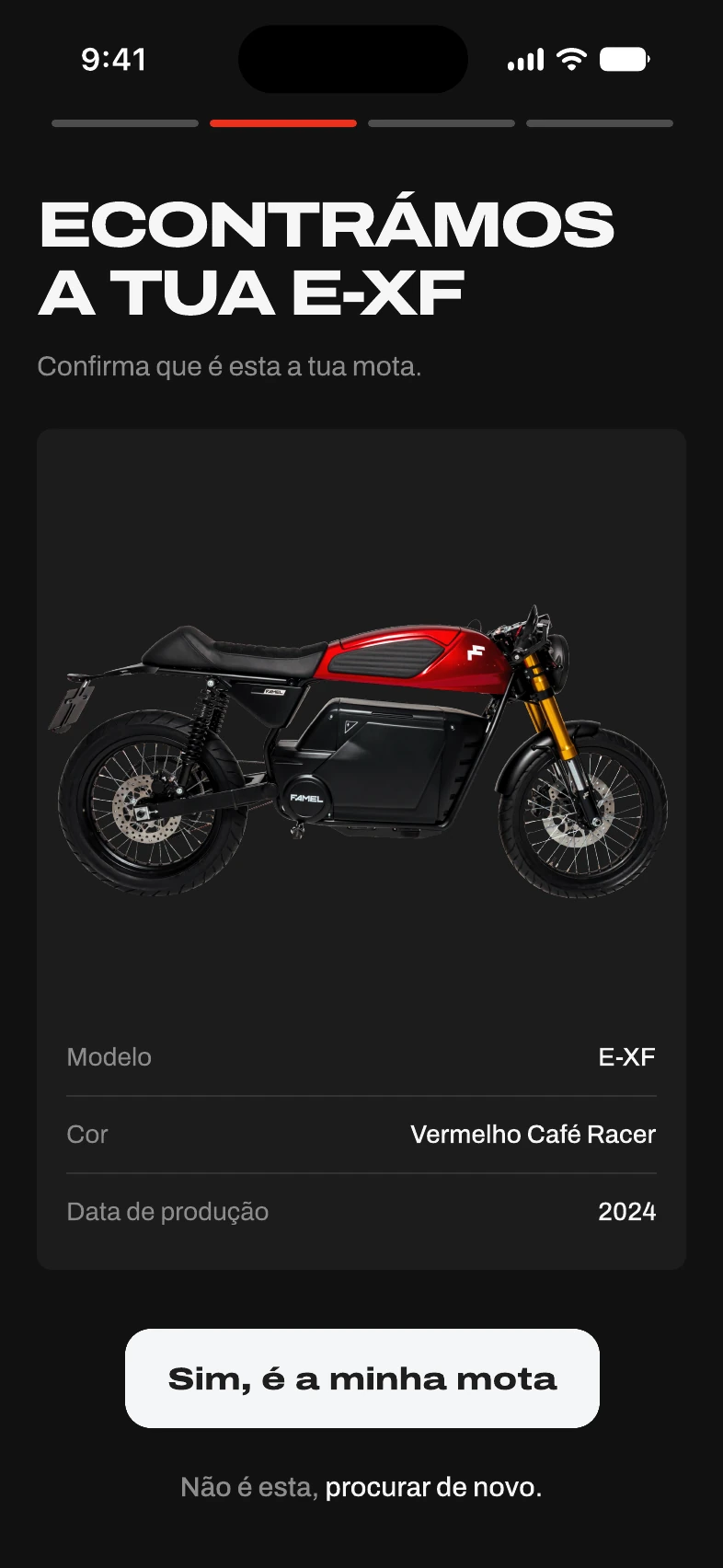
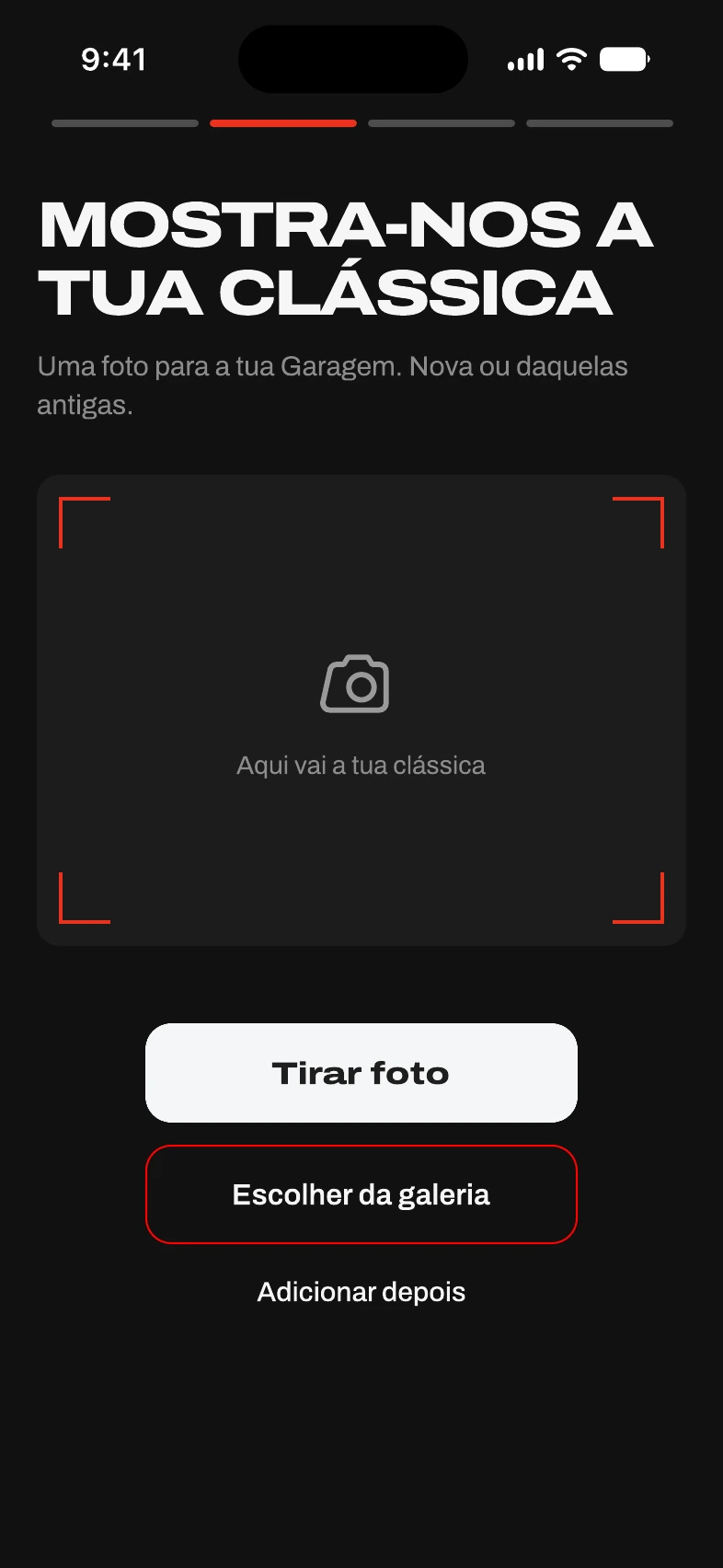
Owner, vintage and community each get their own welcome — and land in the same place.
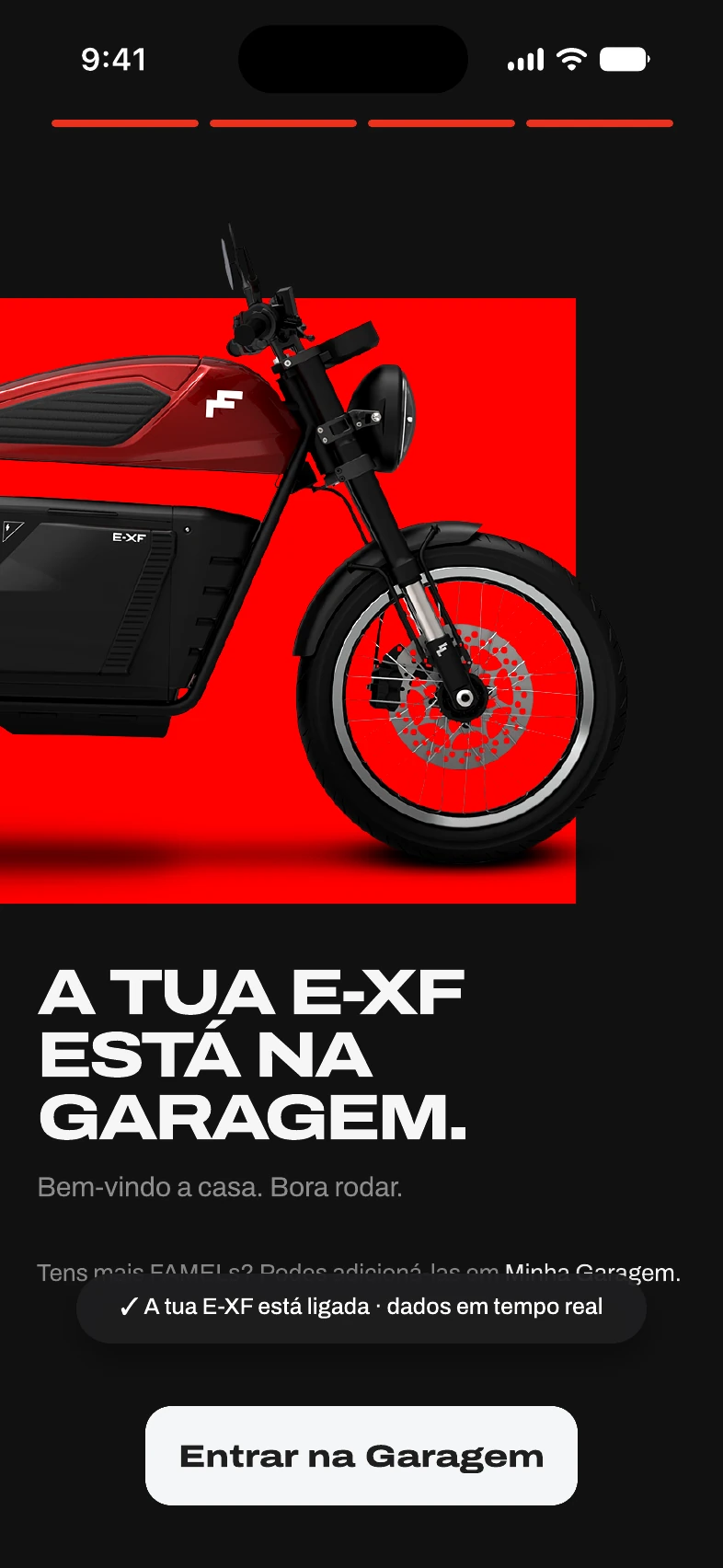
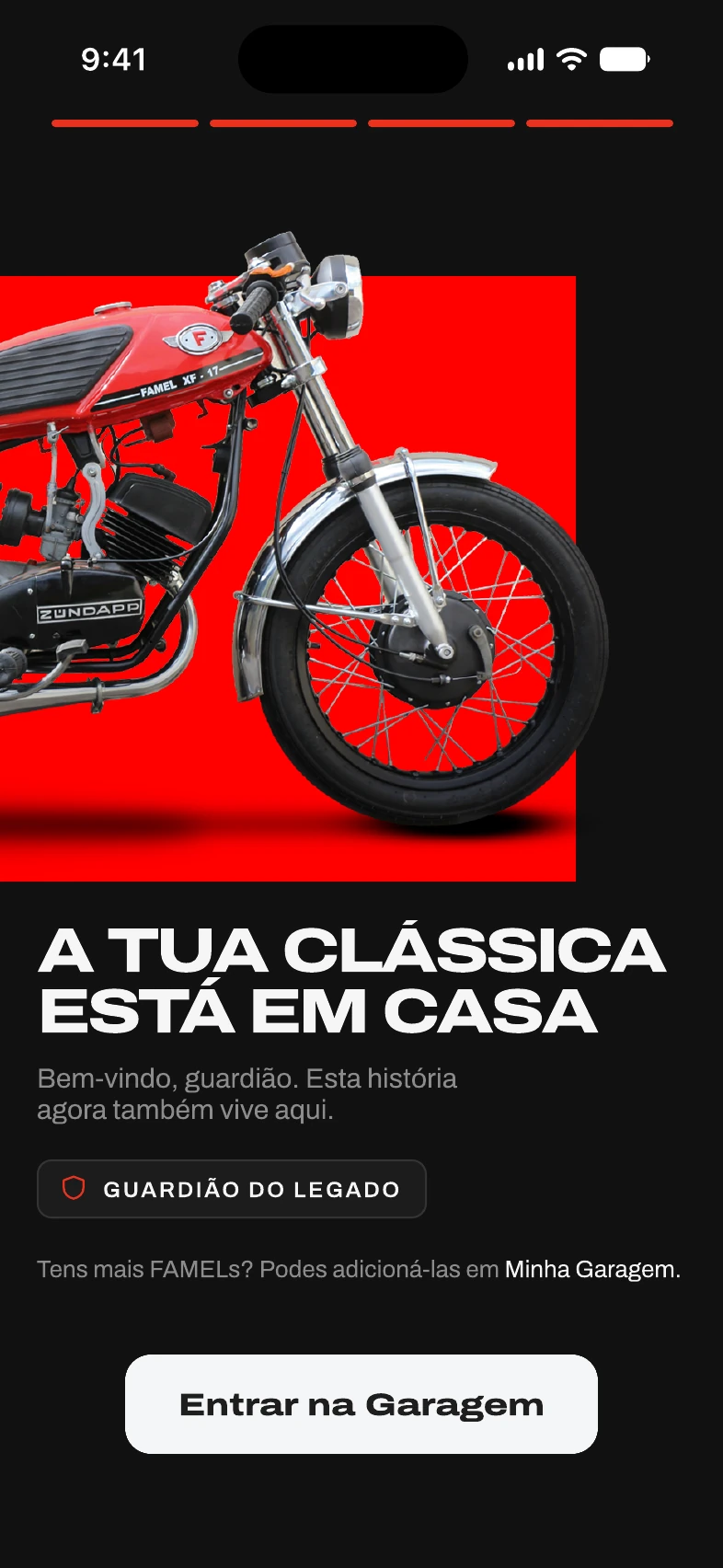
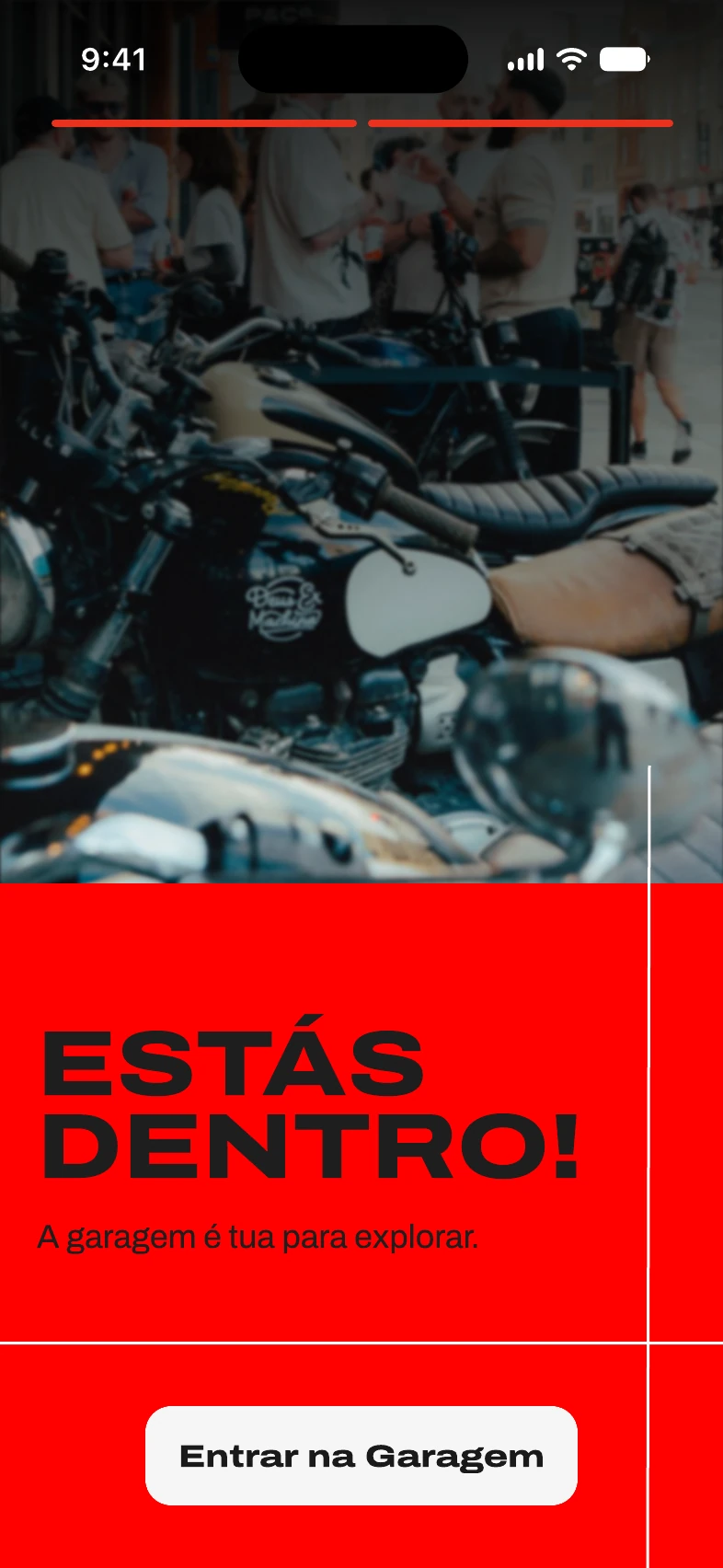
A personal space that shapes itself to what you bring. One bike, five, or none.
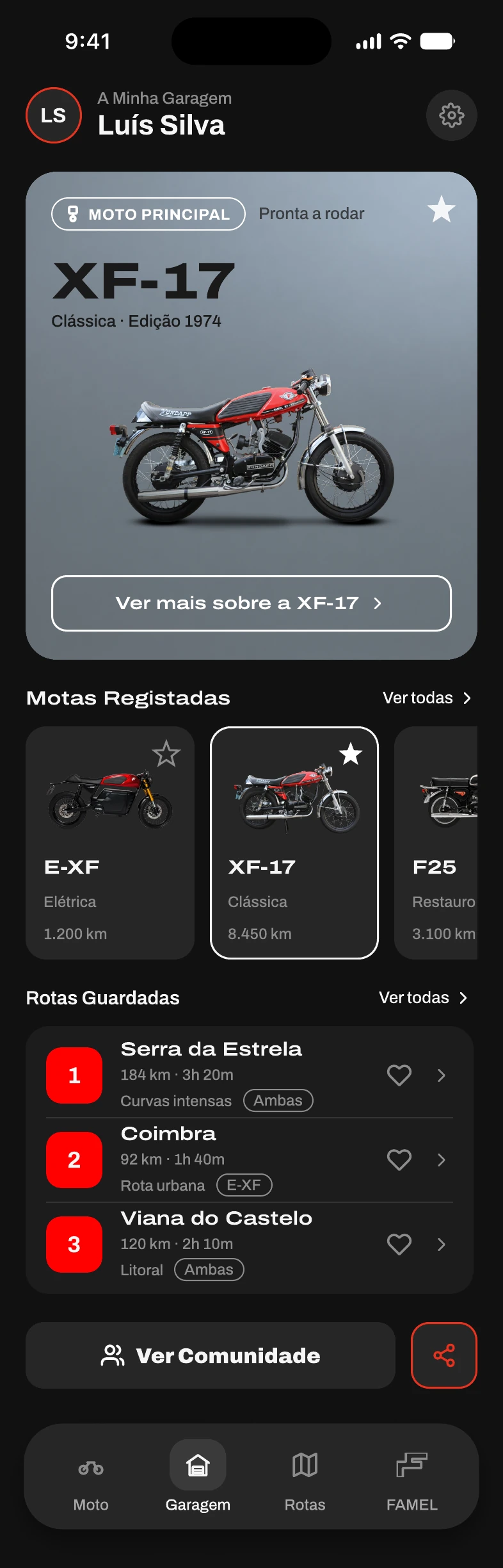
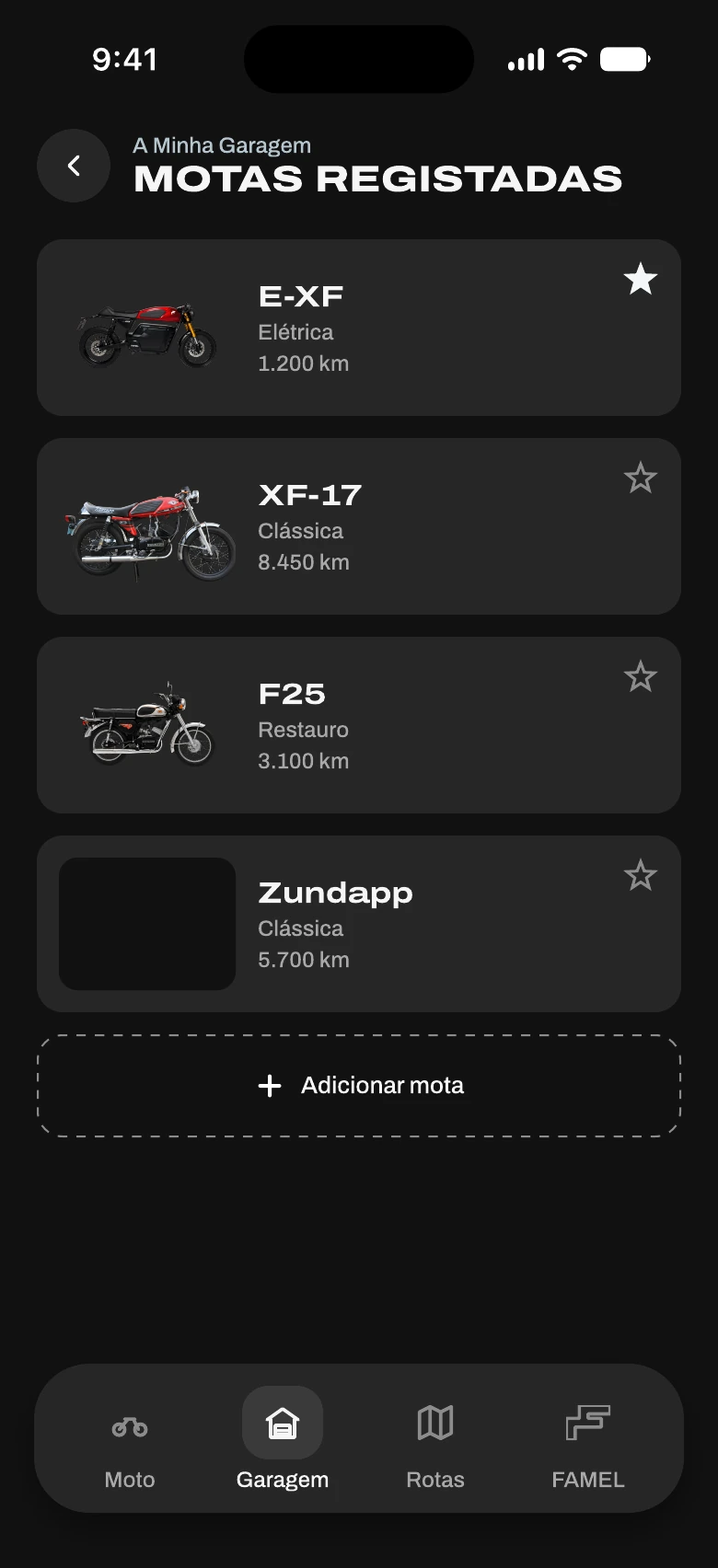
Status and mileage for the E-XF, history and memory for the classic.
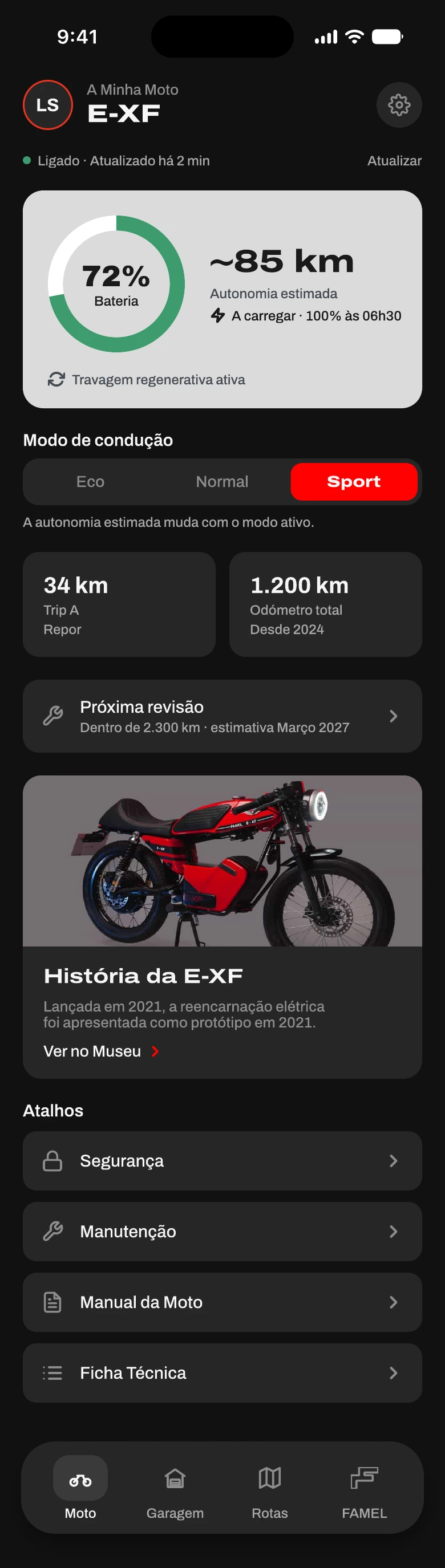
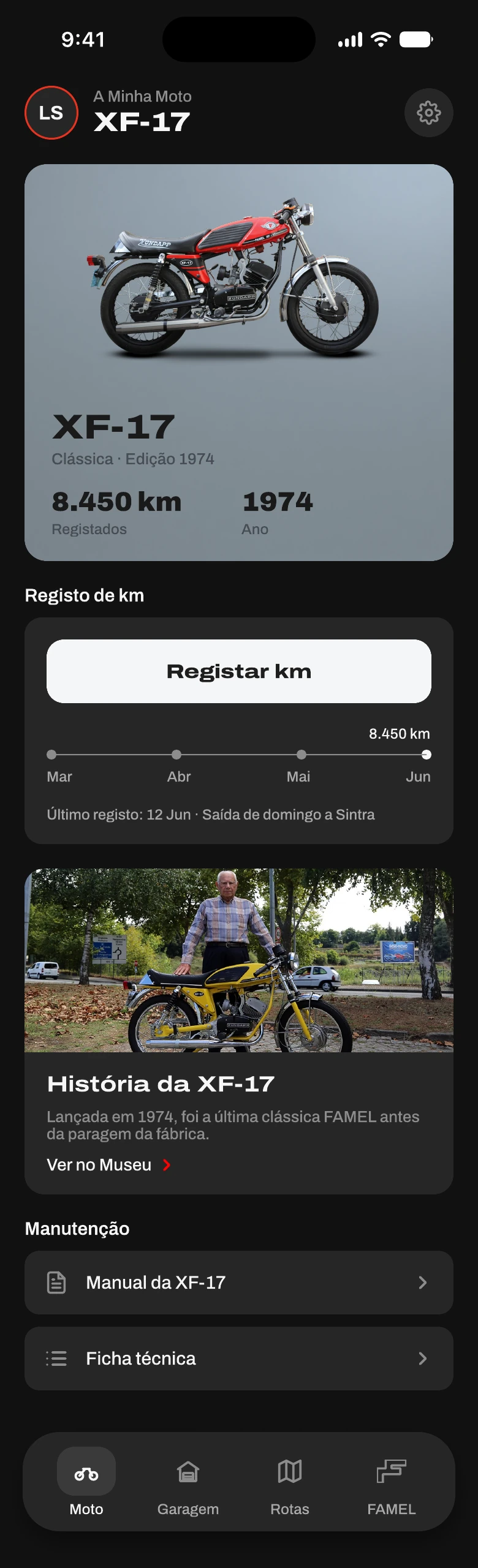
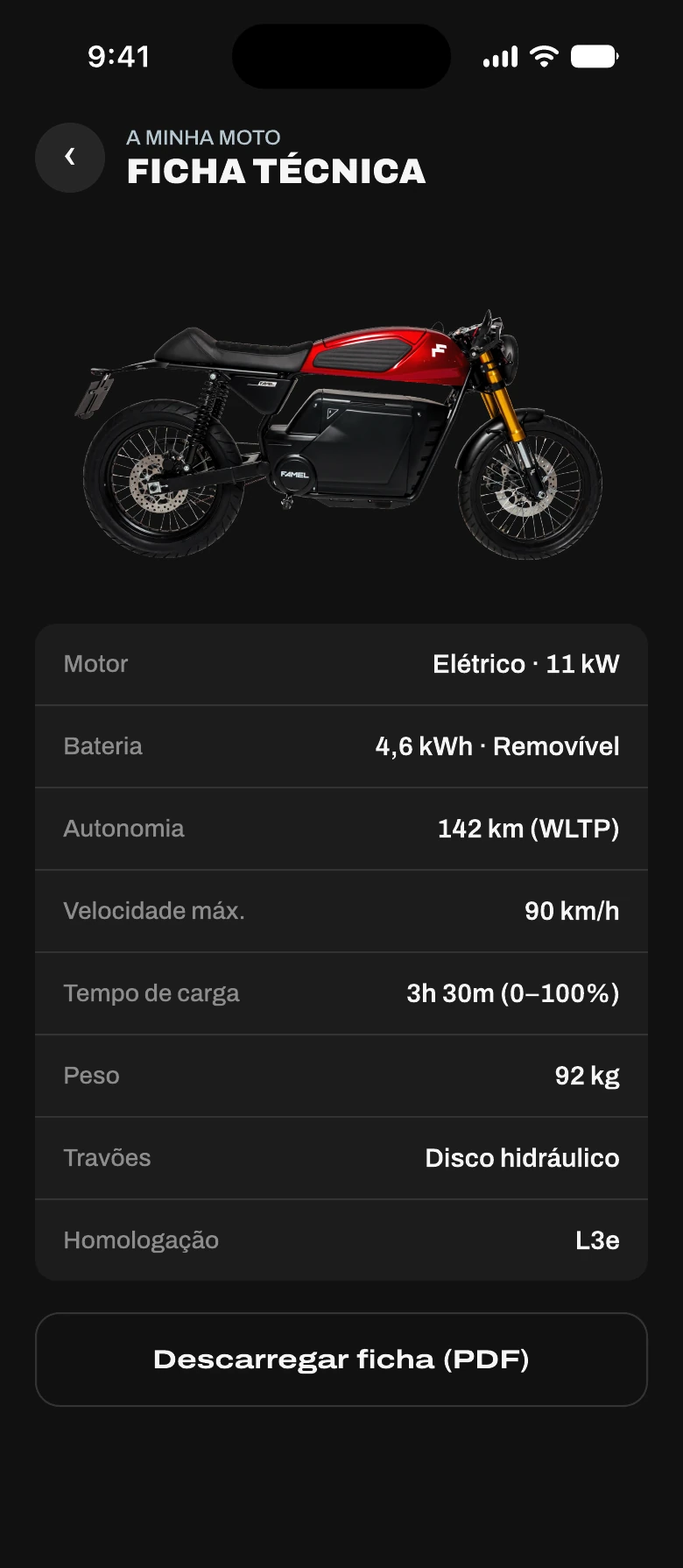
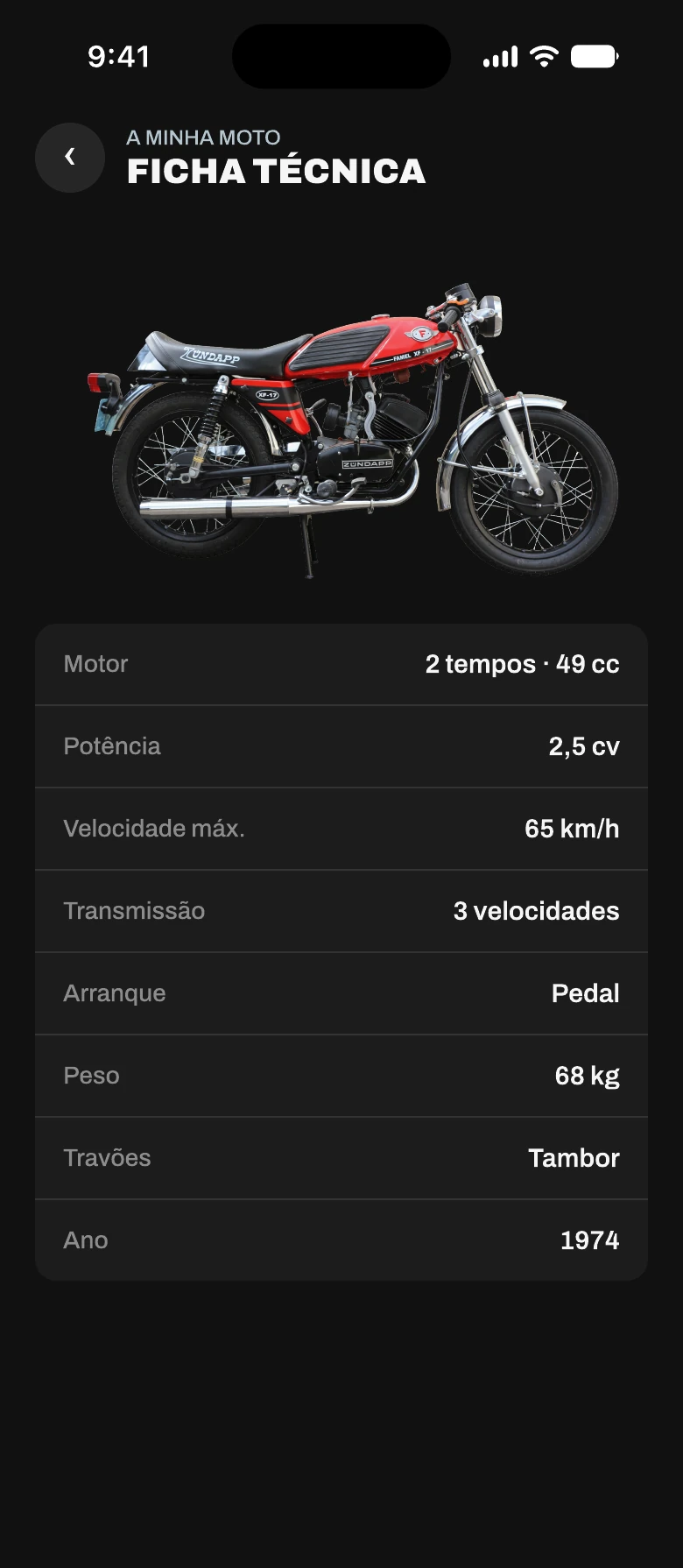
Favourite routes with elevation and points of interest — where both communities finally meet.
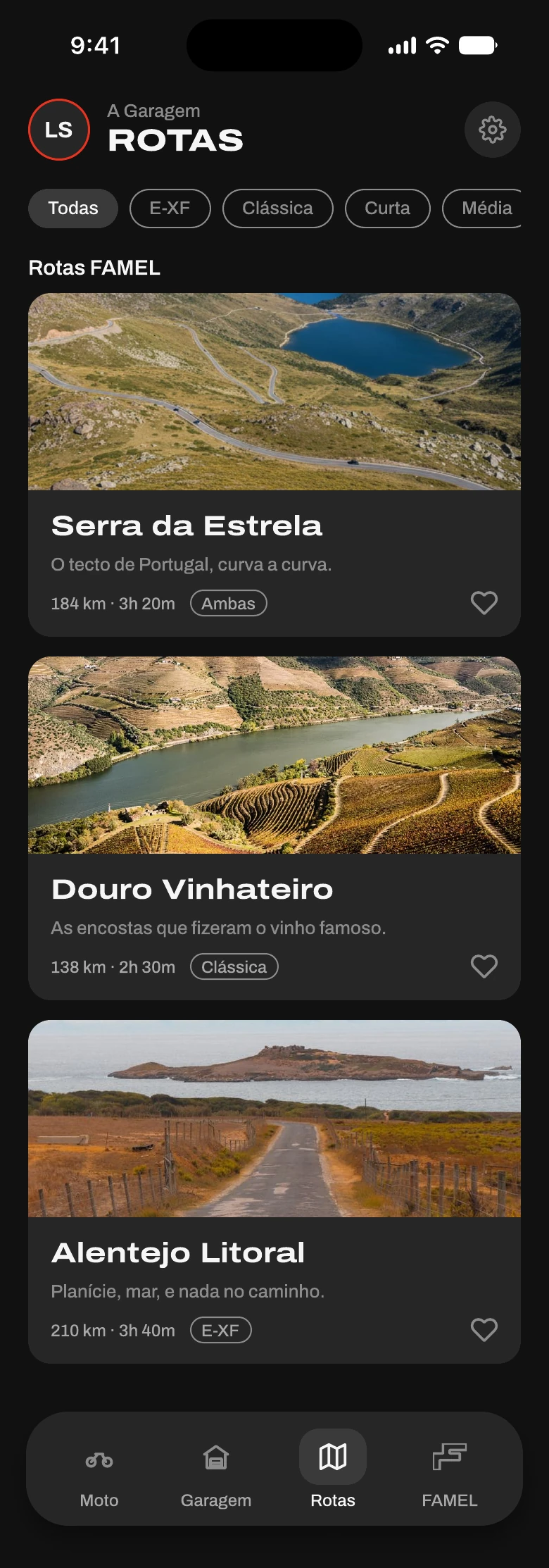
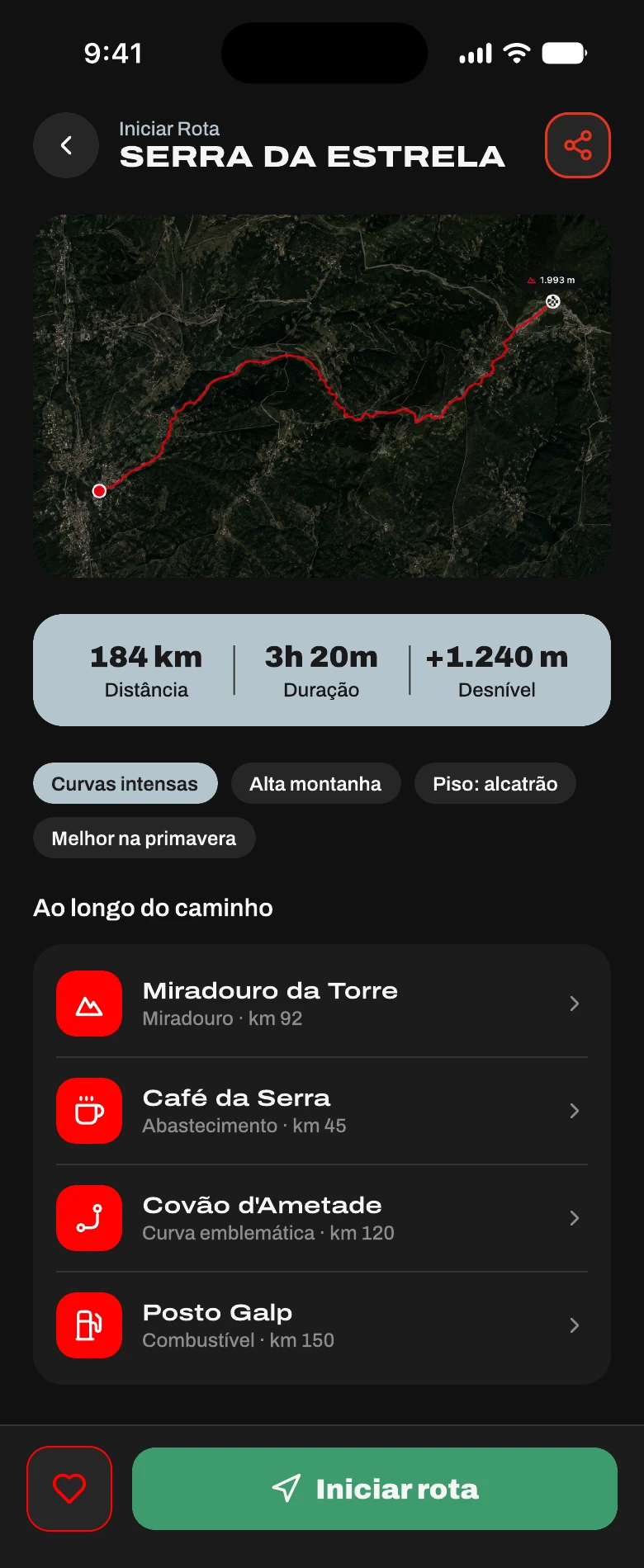
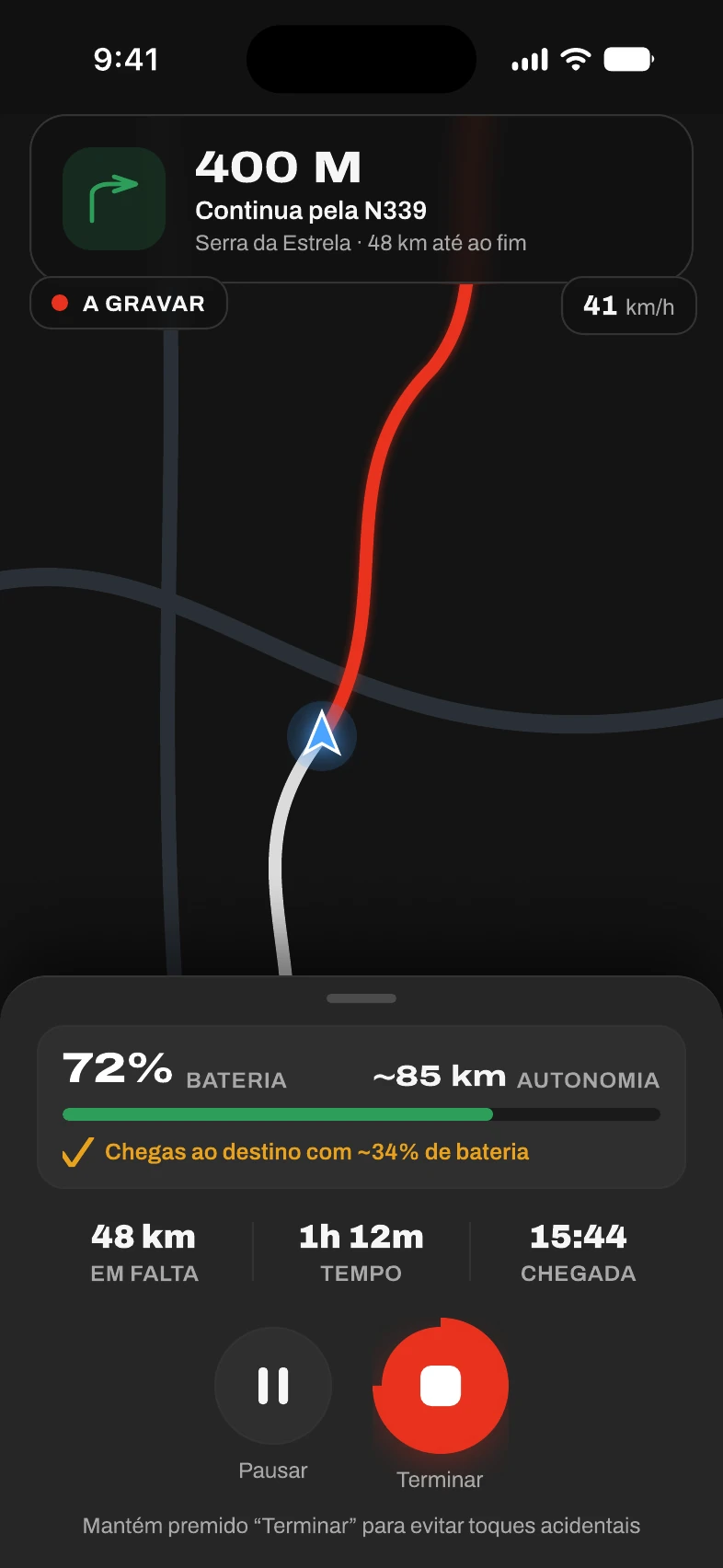
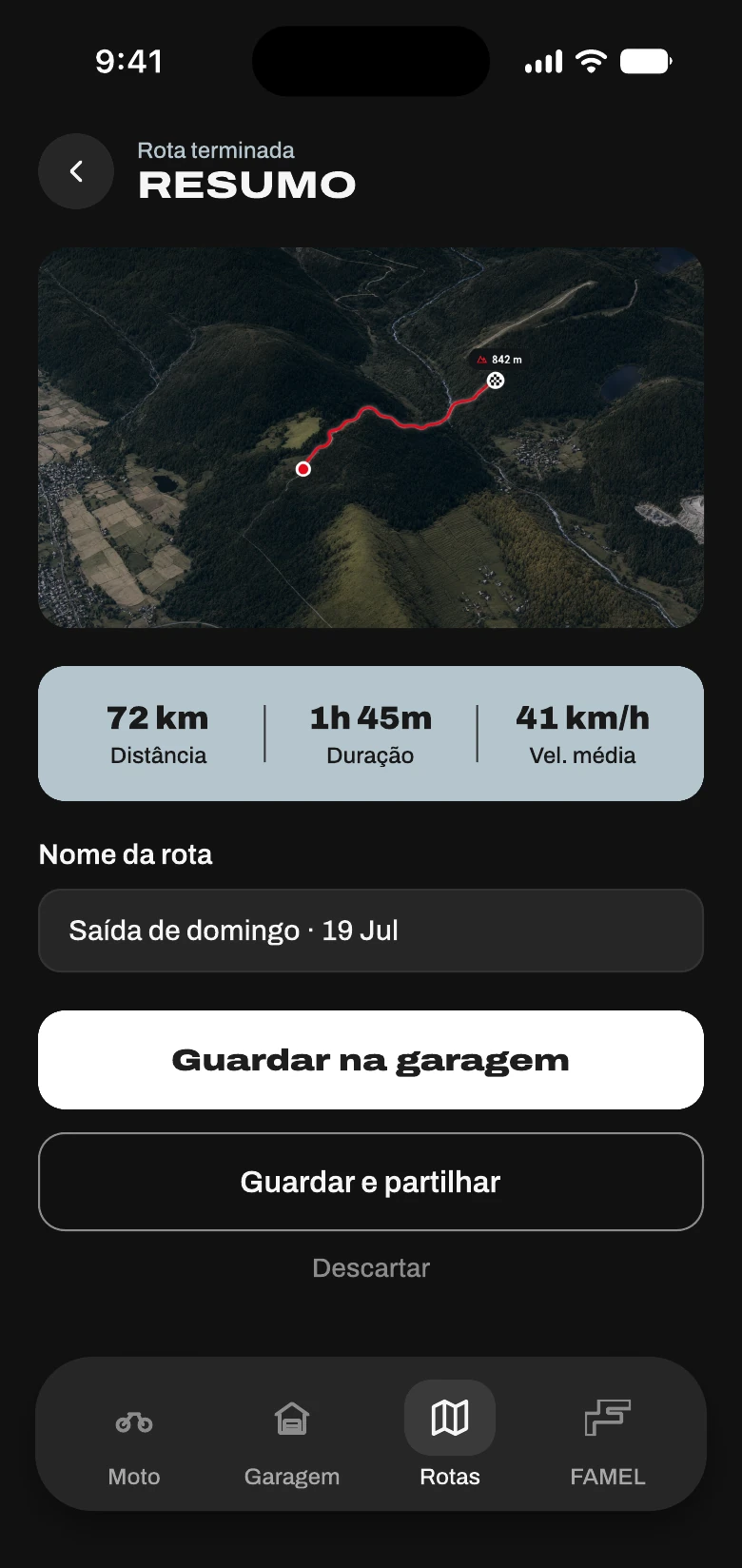
From 1955 to the E-XF, open to everyone.
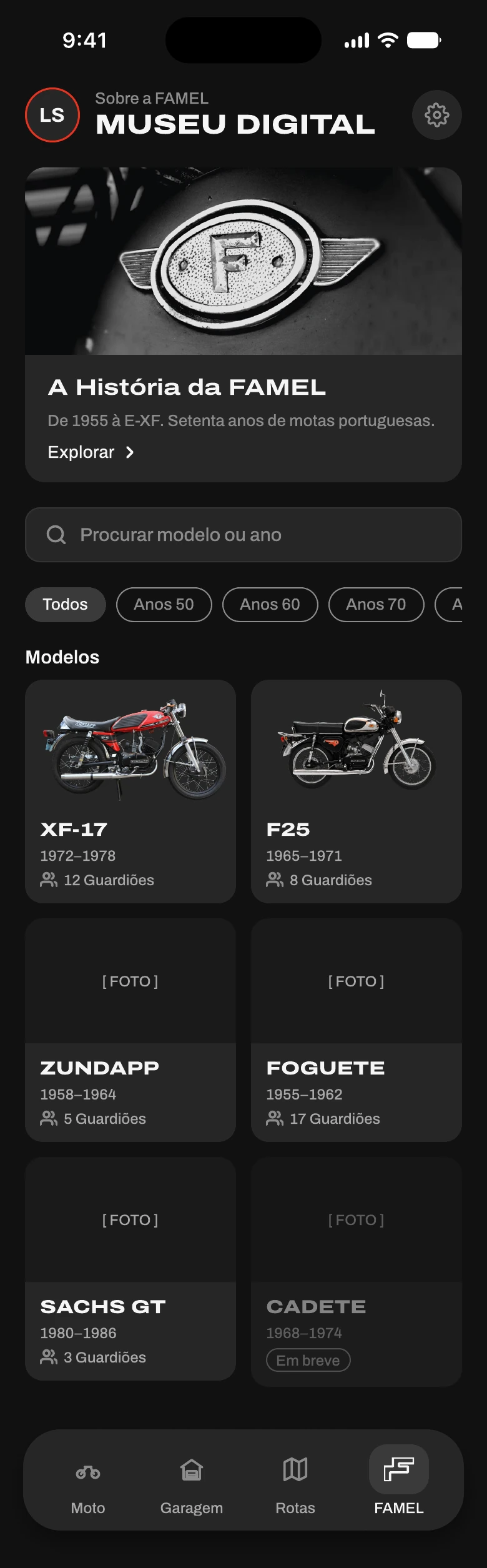
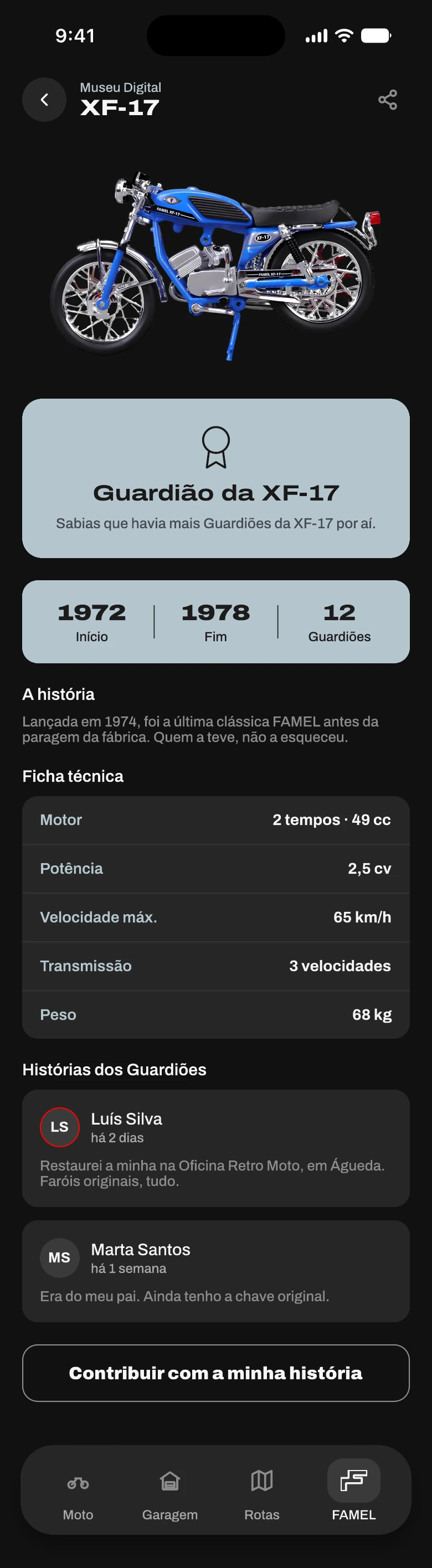

A brandbook, turned into a system.
Everything starts from FAMEL's own brandbook: pure red (Pantone 185), steel (Pantone 5435) and black, Archivo at its heaviest, sharp corners and the corner-bracket signature. In Figma that became 71 variables — primitives, semantic colour with light and dark modes, spacing and radius — and a component library every screen is assembled from. The app ships in dark, so the bike and the red can breathe.
#FF0000#CC0000#B5C5CE#FFFFFF#F5F6F7#1E1E1E#121314#1E1E1E#3A3A3A#565656#7F7F7F#BFBFBF#D9D9D9#ECECEC#2E9E5B#E8A11C#E5484DButton
Tag
Input field
Icons
List Cell
Search Bar
Segmented Control
Battery Gauge — tap
Spec Row
Stat Card
Quick Action
Banner
Bottom Nav
Top App Bar
Bottom Sheet — tap
“I signed up and it seems to work really well. Intuitive and fluid. Compared to the Honda app, I like this one more.”
“The onboarding was super quick. I don't have a bike, but I realised I should get one to see everything.”
A good metaphor solves more than a good flowchart.
Serving two opposite audiences wasn't solved with decision-tree logic, but with one idea both could see themselves in. The architecture came after — and came easily, because the metaphor was right. The brand's heritage wasn't a visual constraint; it was the product argument.